
DeSoto Historical Directory Shelves
There is no verified, continuous DeSoto-only city directory run in the official sources. The practical collection is regional. Dallas Public Library holds Dallas and Texas city and telephone volumes in print or microfilm, and its history staff points researchers to digitized Dallas volumes in the Portal to Texas History. The library describes those annual listings as resident and business records, but a Dallas volume is not automatically a DeSoto volume. Check the title page, coverage statement, street pages, and page images before treating a hit as local evidence.
| Collection | Coverage described | Where held | Access |
|---|---|---|---|
| Dallas and Texas city and telephone directories | Annual publication concept; exact DeSoto span not stated | Dallas Public Library Dallas & Texas History | Reference or microfilm; ask for DeSoto, De Soto, Greater Dallas, city, and telephone variants |
| Portal to Texas History annual listing collection | 361 items across 137 years, with scattered years from the 1860s to 2022 | University of North Texas Portal | Online page images and OCR; inspect each volume |
| United States directory collection | Collection range of 1861-1960; local coverage varies | Library of Congress | Online browse and search |
| Dallas Public Library newspaper holdings | Dallas Morning News online coverage described as 1885-1984, plus broad microfilm | Dallas Public Library | Card, in-library, or microfilm access depending on the source |
The collection numbers are useful perspective, not proof of an uninterrupted DeSoto title. The Portal’s 361 items cover 137 years across the collection, and the visible browse years are scattered. Start with a year near the event, search one earlier and one later, and retain the volume title with every result.
DeSoto Directory Help Desks
DeSoto Public Library is a sound first stop for a current catalog check. Its public page lists the library at 211 E. Pleasant Run Road, Suite C, with Adult Information at 972-230-9661. Hours listed are Monday through Thursday from 10 to 8, Friday and Saturday from 10 to 6, with Sunday closed. The same page does not list a dedicated DeSoto directory run, an obituary index, or a genealogy room. Ask Adult Information about current local-history, newspaper, yearbook, cemetery, and interlibrary-loan holdings before assuming a shelf exists.
DeSoto Public Library
Adult Information can check local holdings and catalog routes. The library shares a catalog and reciprocal cards with Lancaster, Duncanville, and Cedar Hill through Best Southwest Library Partners.
Dallas Public Library
Dallas & Texas History supplies the regional directory, newspaper, microfilm, and county-depository route when a DeSoto search needs a wider shelf.
Dallas Public Library’s Dallas & Texas History desk displays the regional collections that make this broader search possible.
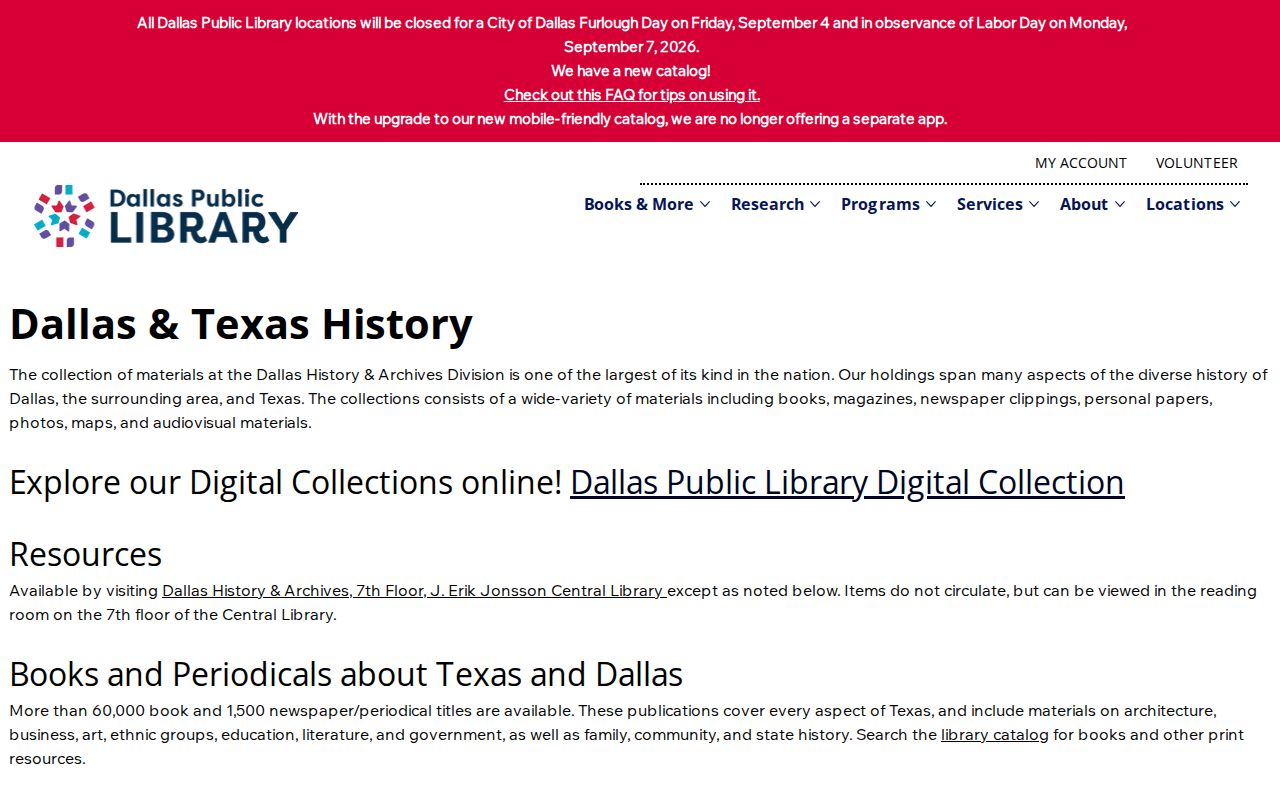
That collection page is a useful starting point for a request that names the household, date, and possible Greater Dallas wording, rather than asking for an unspecified directory.
Note: A library catalog result confirms that an item exists, but the title page and relevant image must still establish its geographic coverage.
DeSoto Online Directory Volumes
The Portal to Texas History annual listings collection makes page images and OCR available without claiming a continuous DeSoto series. Search “DeSoto,” “De Soto,” street names, suburban routes, and “Greater Dallas,” then open the scanned page. OCR is an aid, not a final reading. Initials, tight columns, punctuation, and old type can all make a name search miss a page that is present in the volume.
The Portal is particularly helpful when a known address or cross street can be tested in a street section. It also makes it easier to compare the printed form of a name from one year with the next. Preserve a page reference, volume year, and the surrounding street heading. Those details are what make a later census, deed, or obituary comparison reliable.
The digitized annual listings collection shows the online browse interface used for this DeSoto historical search.
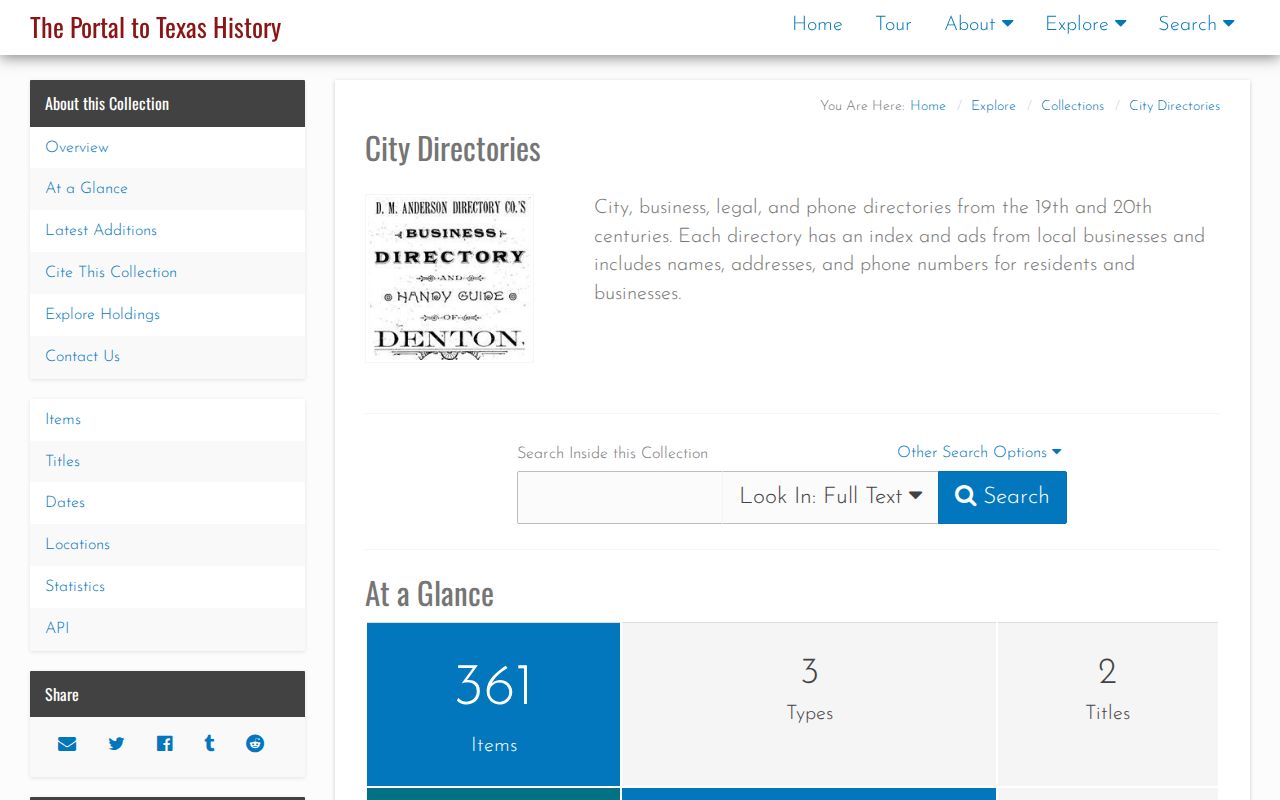
The browse screen helps locate candidate years, but every candidate needs a page-level check for the community, address, and person being researched.
Reading DeSoto Directory Entries
A 1938 Dallas directory page inspected in the Portal shows the kind of street-section detail a DeSoto search may encounter: a street or neighborhood heading, house number, surname and given name or initials, role abbreviations, business or institution entries, owner or residence marks, vacant locations, and intersection notation. A 1928 volume likewise shows street blocks, address numbers, cross-street language, names, initials, owner marks, and vacant entries. Read the introduction of the same volume before expanding abbreviated terms.
| Street heading | Places the entry on a named street or neighborhood section and can supply nearby cross-street context. |
|---|---|
| Address number | Connects the printed listing to an address, subject to later changes in numbering or city boundaries. |
| Name and initials | Identify the printed person, but should be compared with another independent record before a match is accepted. |
| Role or institution | May appear as a short printed abbreviation or as a business, church, or institutional entry. |
| Owner, vacant, and intersection marks | Can distinguish an owner or residence notation, a vacant listing, or an intersection reference when the volume uses them. |
- Criss-cross directory
- An address-first arrangement that runs from a street location to an occupant. If a volume lacks a separate reverse index, its street section may serve this purpose.
- Householder index
- A name-based list intended to lead from a person or household to an address. The exact arrangement changes by volume.
- Abbreviation key
- The explanatory pages, usually near the front matter, that define a volume’s printed symbols and short forms. Do not guess a meaning before checking them.
DeSoto Directory Reverse Searches
For address-first work, begin with the street section or a true criss-cross section, then compare the name index. A reverse section runs from place to occupant, while a name section runs from person to address. The 1938 and 1928 samples show why both directions matter: a street entry may include a cross street, a vacant notation, or an owner or residence mark that a name-only result conceals.
Historical street searching needs flexible terms. Test DeSoto and De Soto, omit or add a direction, and preserve the road name, subdivision, and cross streets. DeSoto was not incorporated until 1949, so older rural Dallas County context can matter more than today’s city label. A postal city or present boundary should not be pushed backward onto an older directory entry.
Note: A directory is a dated snapshot of a listing, not a complete household roster or proof of current residence.
Following DeSoto Directory Households
Use a sequence of directory years to track a household between federal census releases. Federal census schedules are public through 1950 under the 72-year release rule. Pairing the two sources can show whether a name remained at an address, changed from initials to a fuller form, or disappeared from a particular listing. Census geography is not a shortcut: before incorporation, DeSoto was a rural Dallas County community, and an enumeration district may not match current city lines.
- Start with a known name, address, date, and likely jurisdiction, keeping the spelling exactly as it appears.
- Check a Dallas-area directory near that date, then one earlier and one later, using street sections for address-first work.
- Record initials, middle names, any printed marital notation, role abbreviation, owner mark, house number, and cross street.
- Pair the dated listing with the nearest released census and compare address, relatives, and the surrounding geography.
- Confirm a likely identity with two anchors, such as a relative, an unusual middle initial, a legal description, or the next address.
A person leaving a directory may have moved, died, gone unlisted, or appeared under a variant. Newspapers, probate, deeds, cemetery material, and later directory pages help sort those possibilities. For a parcel-by-parcel backward trail, use the DeSoto previous residents record path after the address is stable.
DeSoto Directory Research Collections
The Dallas Public Library genealogy resources add finding aids to a historical listing search. The Bockstruck Genealogy Collection has surname-indexed vertical files, Family Bibles, Veterans Oral History, Dallas Genealogical Society microfiche, and FamilySearch Affiliate access. More than 400,000 additional digital records are available on library computers through the affiliate arrangement. The collection also lists local indexes for Dallas County cemeteries, marriage Book O for 1895-1896, mortality schedules, early tax material, court abstracts, probate, and McGowan funeral records.
Dallas Public Library genealogy resources describe the vertical files, indexes, and library-only research routes available beside the DeSoto directory material.
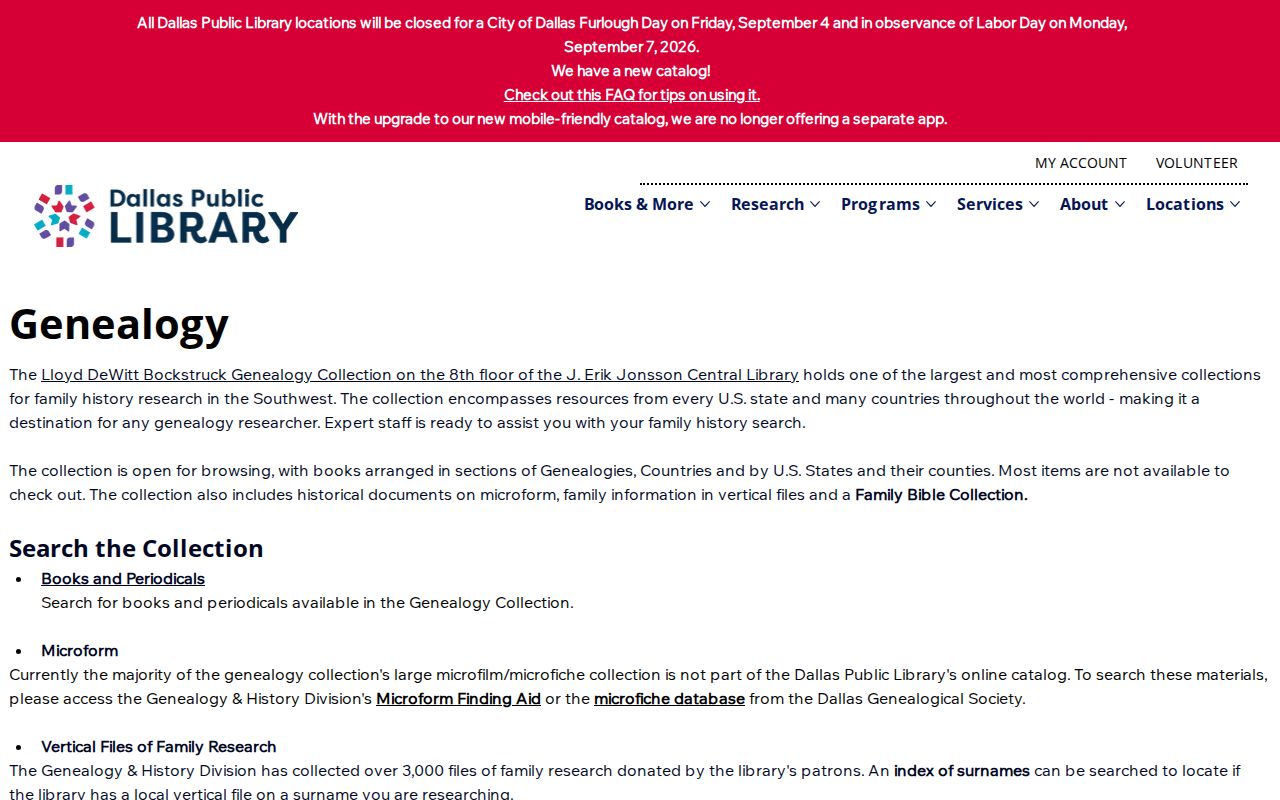
These resources can test a directory lead against a surname file, a family record, or a local index, but the original custodian remains the source for a certified record.
The Dallas Historical Society Dealey Library is another Dallas County and Texas research desk, with books, photos, documents, artifacts, periodicals, a digital catalog, and TARO finding aids. It is appointment-only, offers brief questions without charge, and reported a closure from August 29 through November 2, 2026 during the State Fair period. Contact the society before planning an in-person visit.
The Historical Society collections page shows the access point for material that can add family or civic context to a DeSoto directory lead.
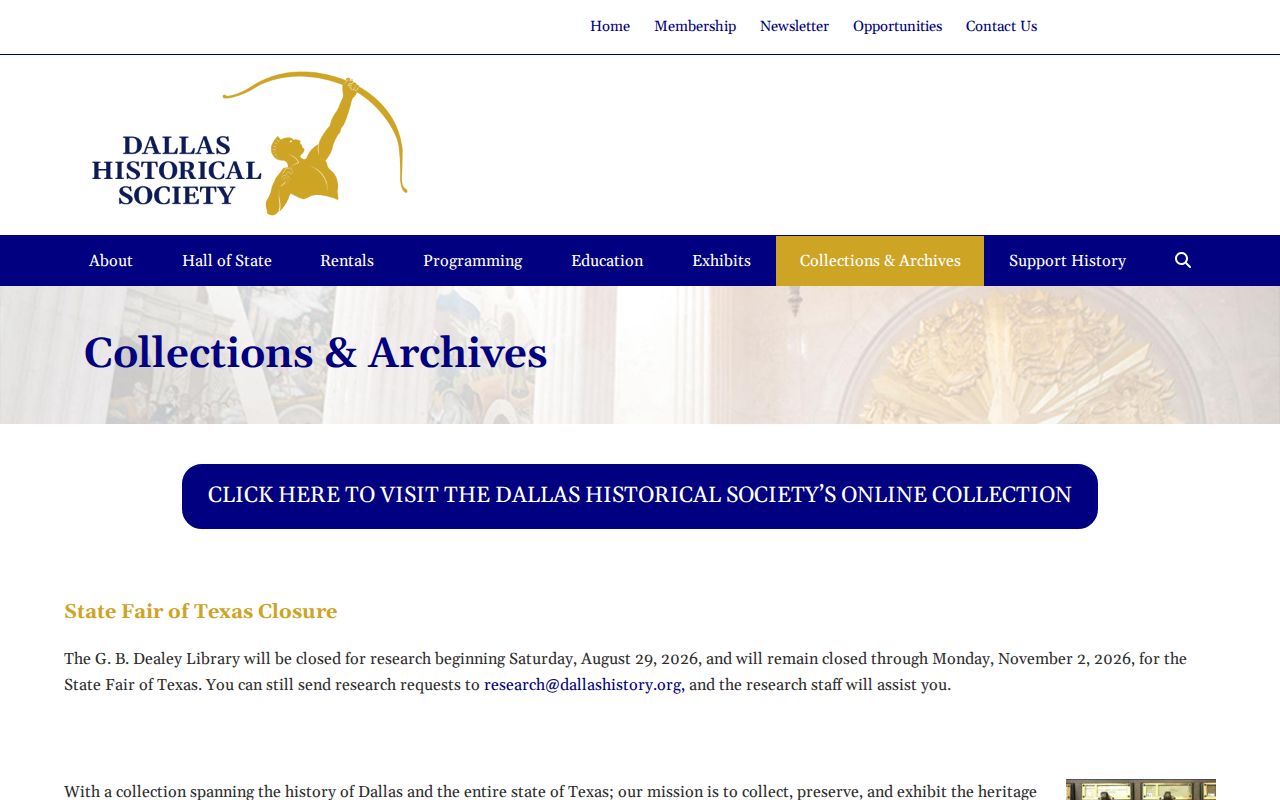
Its catalog and finding aids are best used to identify a collection before making an appointment or asking a focused research question.
DeSoto Historical Directory Limits
DeSoto’s record story explains why a regional search is necessary. The community’s post office dates to 1881, while incorporation came in 1949 after a petition signed by 42 eligible voters and an election decided 50 to 2. The first council meeting took place at the schoolhouse. That history is a reminder that older residents may appear under rural Dallas County, a road name, a subdivision, or De Soto spacing rather than under a modern city heading.
Dallas County sources preserve many early record groups even though courthouse fires affected earlier buildings. TSLAC and local repositories list surviving tax rolls, court papers, minutes, inquests, and cemetery material for specific periods. An empty annual-listing search is therefore not a final answer. Check the volume’s coverage, then move to the appropriate county microfilm, newspaper, deed, probate, or cemetery route with the date and place held constant.