
DeSoto Previous Residents by Era
One DeSoto address can lead into county, city, library, and state-held material. The right starting source depends on the period. Current appraisal data identifies the parcel and owner fields. County deed indexes supply recorded parties and dates. Directories and census schedules add household evidence once the parcel has been held steady. Permits can date a project, while newspapers, probate, and historic county material can carry the trail beyond a household’s last listing. Each source answers a different question, so results should not be substituted for one another.
| Source | Years described | Where held | What it can show |
|---|---|---|---|
| Dallas County Official Public Records | Portal certified through 02/16/2026; beginning year not stated | Dallas County Clerk portal | Recorded index, parties, dates, document types, and OCR or full text where available |
| Dallas historical deed index books | 1846-1963 | Kofile QuickLink and county-linked historical index | Grantor, grantee, year, parties, and book, volume, or page leads |
| DCAD appraisal record | Current roll; beginning year not stated | DCAD search and map | Current owner, mailing and situs addresses, legal description, values, and exemptions |
| Dallas-area directories and census | Directory runs vary; federal census public through 1950 | DPL, Portal, Library of Congress, and census repositories | Address-to-occupant and household snapshots |
| DeSoto permits and county archives | Current permit portal; historic start not located | City CSS, TSLAC, and local depositories | Project timing, historic tax, court, minute, inquest, and cemetery anchors |
The Dallas County Official Public Records search is the current online index used in a DeSoto address trail.
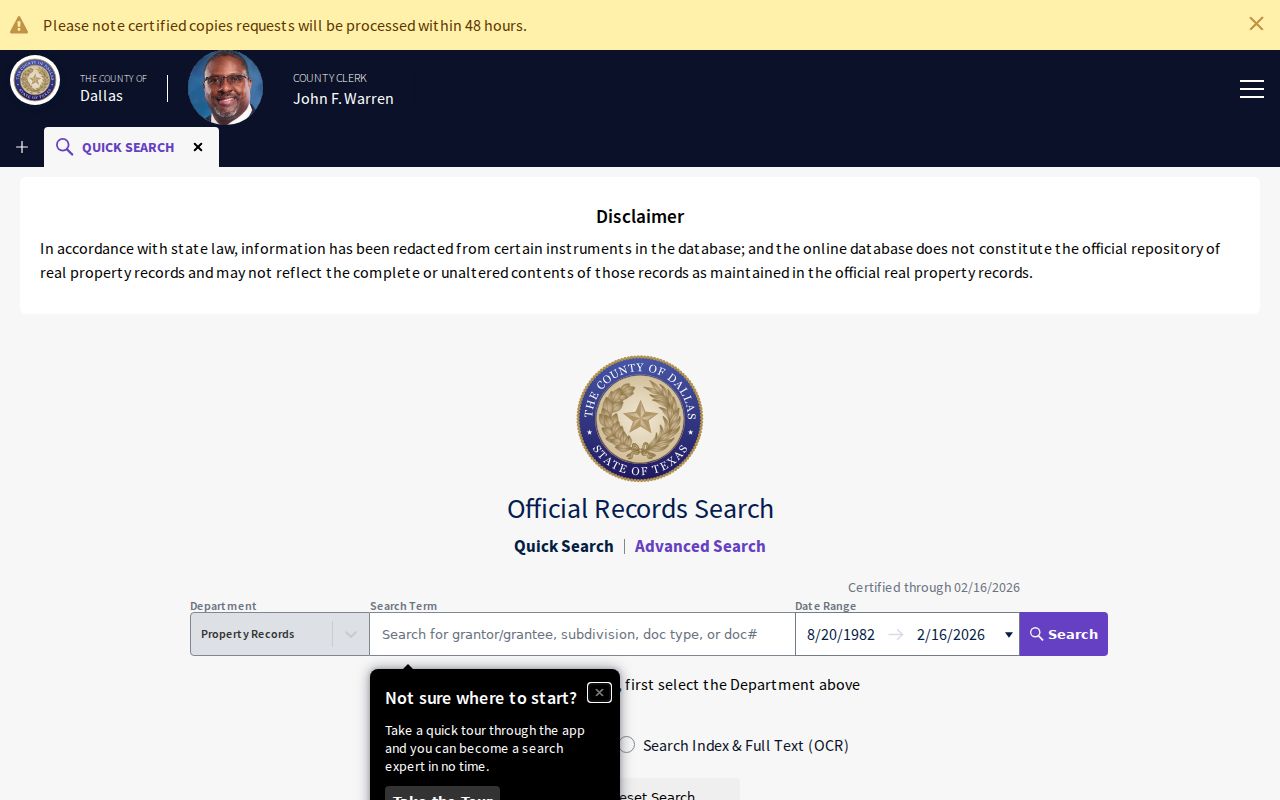
Its grantor, grantee, document-type, date, and OCR controls are a bridge between a current parcel card and a recorded instrument, rather than a household roster.
DeSoto Past Residents at DCAD
Dallas Central Appraisal District address search is the current parcel anchor. It accepts a number and street name, with optional direction, building, suite, city, and number range. Street type is excluded from the street-name field. The results lead to a parcel card that can show the account number, owner, mailing address, situs or property address, legal description, values, exemptions, taxing entities, and a map path.
For previous residents research, the legal description and account number are the safeguards. The situs is the physical parcel location. A mailing address is where appraisal or tax correspondence goes, and may be a different city, street, or suite. The listed owner is an appraisal or recorded owner, not a full list of people at the address. A homestead exemption can be an occupancy clue, but it is not conclusive proof. DCAD says ownership changes can take 45 to 90 days, so compare an instrument date and clerk deed when a record appears behind the transaction.
Note: Keep the owner, mailing address, situs address, account number, and legal description in separate notes because they serve different records questions.
DeSoto Past Residents in Deed Books
When the recorded chain reaches an older book or the current portal cannot reach the needed entry, use the Dallas County historical deed index books. The county-linked service identifies Deed Record Index Books for 1846-1963 and supports searches by type, year, parties, last name, first name, document fields, and Book, Volume, or Page. It is an index and document-order route, not a statement that every older image is freely viewable online.
The shift at 1963 is a records access change, not an end to the parcel. Use the older party and book references with Dallas County Central Records or county historical books and microfilm. The clerk’s request form accepts grantor or grantee, instrument number, document type, property address, and city or ZIP. Plain copies cost $1 per page per document; certified copies add a $5 certification charge per document. The form also sets the payment and mail procedure.
The historical deed-index interface provides the older-book route for DeSoto address research.
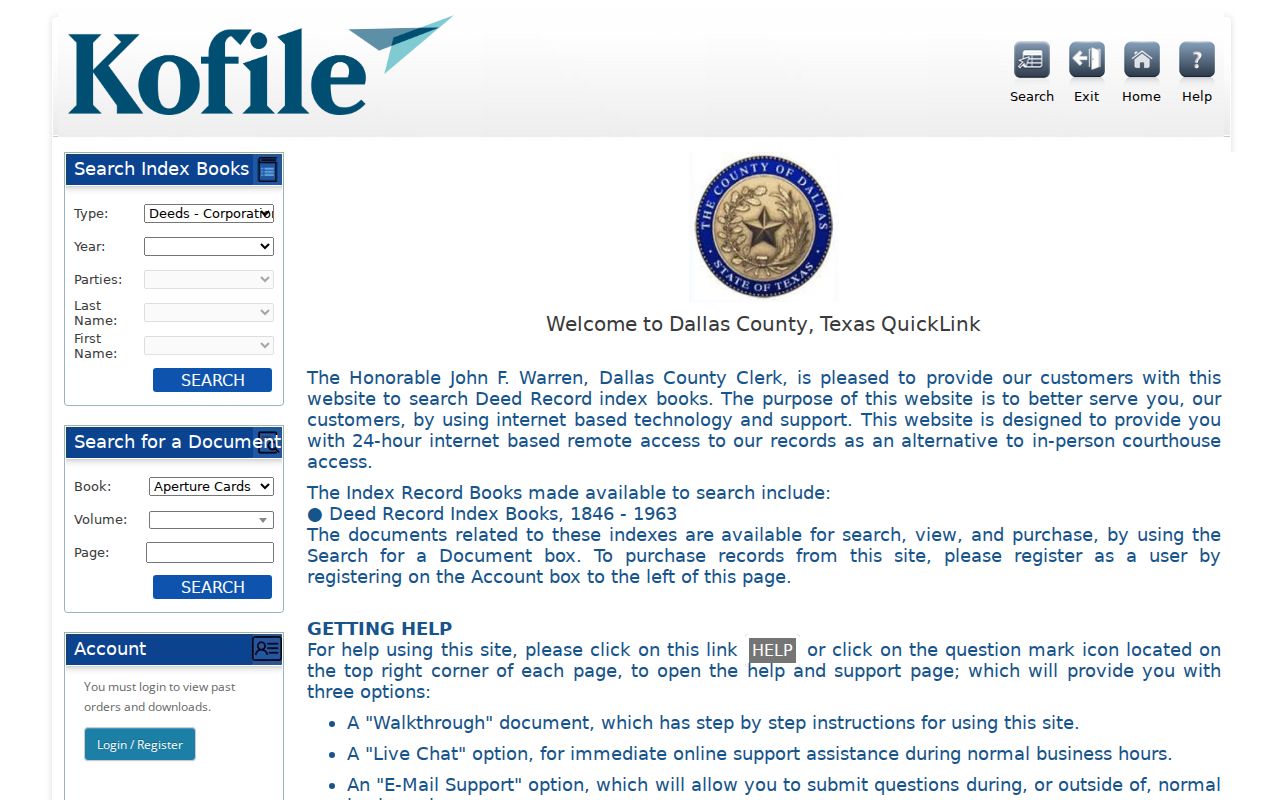
A book, volume, or page reference can carry the same parcel backward when a modern address search no longer produces the right entry.
Tracing DeSoto Past Residents Backward
A chain of title is the linked sequence of ownership instruments for the same parcel. Start with the current DCAD card, then use the Dallas County portal to find the acquisition deed for the current owner as grantee. A grantee is the person or entity receiving an interest in an instrument. The grantor is the person or entity transferring it. Compare the legal description, subdivision, lot and block, recording date, and document number each time, because a familiar name alone can lead to a different parcel.
- Save the present address exactly as used by DCAD, along with the account number, legal description, current owner, and mailing address.
- Search the current owner as grantee in the official records index or use an instrument number if the appraisal card shows one.
- Read the acquisition deed for the seller, recording date, and parcel description, then search the seller as grantee for the earlier acquisition.
- Repeat in decreasing date ranges, using subdivision, lot, block, plat, and legal description to reject nearby or same-name results.
- At the older-book boundary, move to Kofile, county historical books, or microfilm and request the needed plain or certified copy from the clerk.
- Grantor and grantee
- The grantor transfers an interest in a document. The grantee receives that interest. A later deed can place the same person in the opposite role.
- Chain of title
- The sequence of recorded documents that ties one ownership interest to the earlier one for the same parcel.
- Legal description
- The lot, block, subdivision, abstract, or metes-and-bounds description used in title records. It remains more dependable than a street label when addresses vary.
DeSoto Past Residents and Households
Ownership is only part of the history. Dallas-area city directories can place occupants at an address, while the released federal census can show a household on its enumeration date. A street section or reverse section is the address-to-name direction; a name index moves from person to address. The samples inspected in the Portal include street headings, numbers, names or initials, role abbreviations, owner or residence marks, vacant entries, and intersection notation. Those printed marks should be copied, not expanded from guesswork.
The Dallas Public Library Dallas & Texas History resources are the regional shelf for directory, newspaper, microfilm, and county-depository research. They do not establish an exact continuous DeSoto run. Search DeSoto, De Soto, Greater Dallas, a street name, and the nearby community terms, then verify each volume’s geographic scope. The historical collections themselves are detailed on the DeSoto city directory page.
The Dallas and Texas History collection is the source for this DeSoto historical-directory and microfilm route.
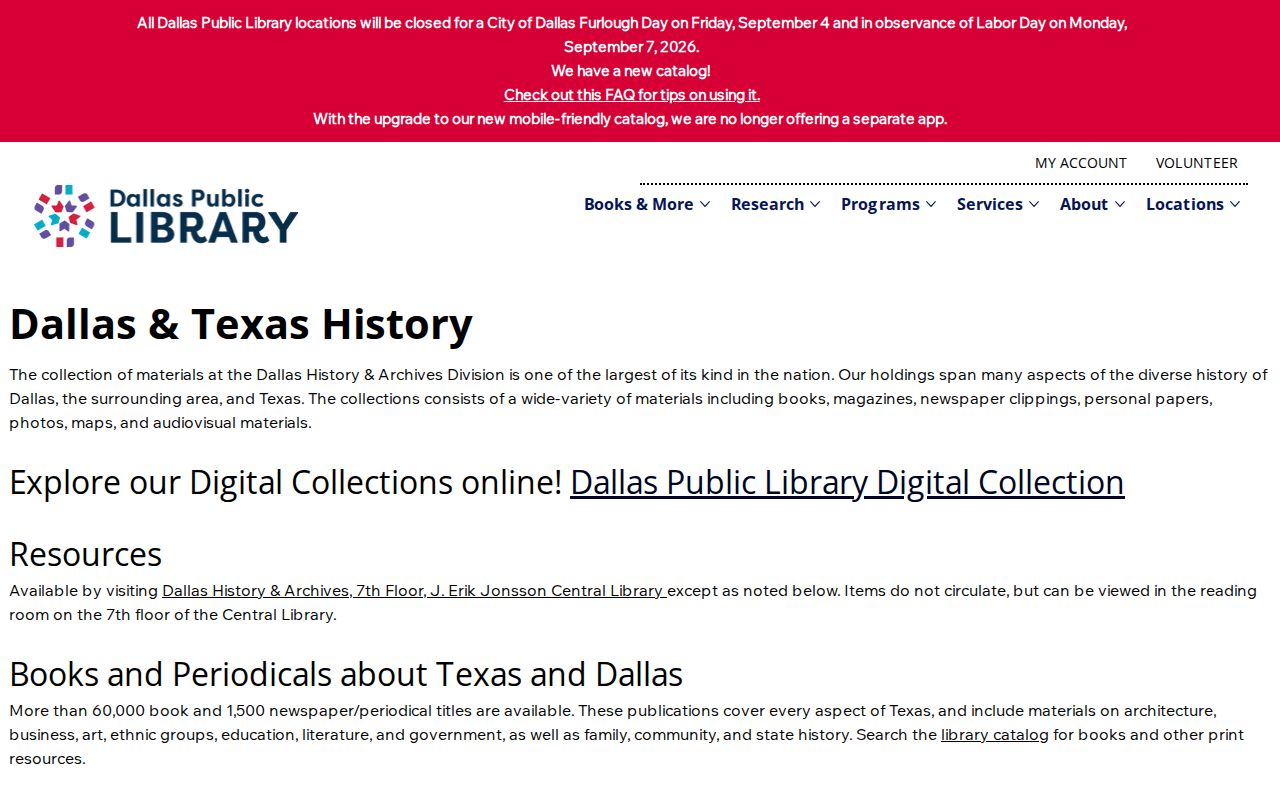
Its regional holdings can provide the directory year that connects a stable address to an occupant, but they do not replace the deed chain.
- After the parcel is stable, find the address in a directory near the target year and record the printed name, number, cross street, and any owner or vacant mark.
- Check one directory before and one after to see whether the address or printed form changes.
- Pair the directory date with the nearest released census schedule, keeping rural Dallas County geography in mind for the period before 1949.
- Use a newspaper, probate file, or later deed only as a dated next step, not as proof that every listed relative lived at the address.
The Portal to Texas History City Directories collection supplies digital page images and OCR for the relevant scattered volumes.
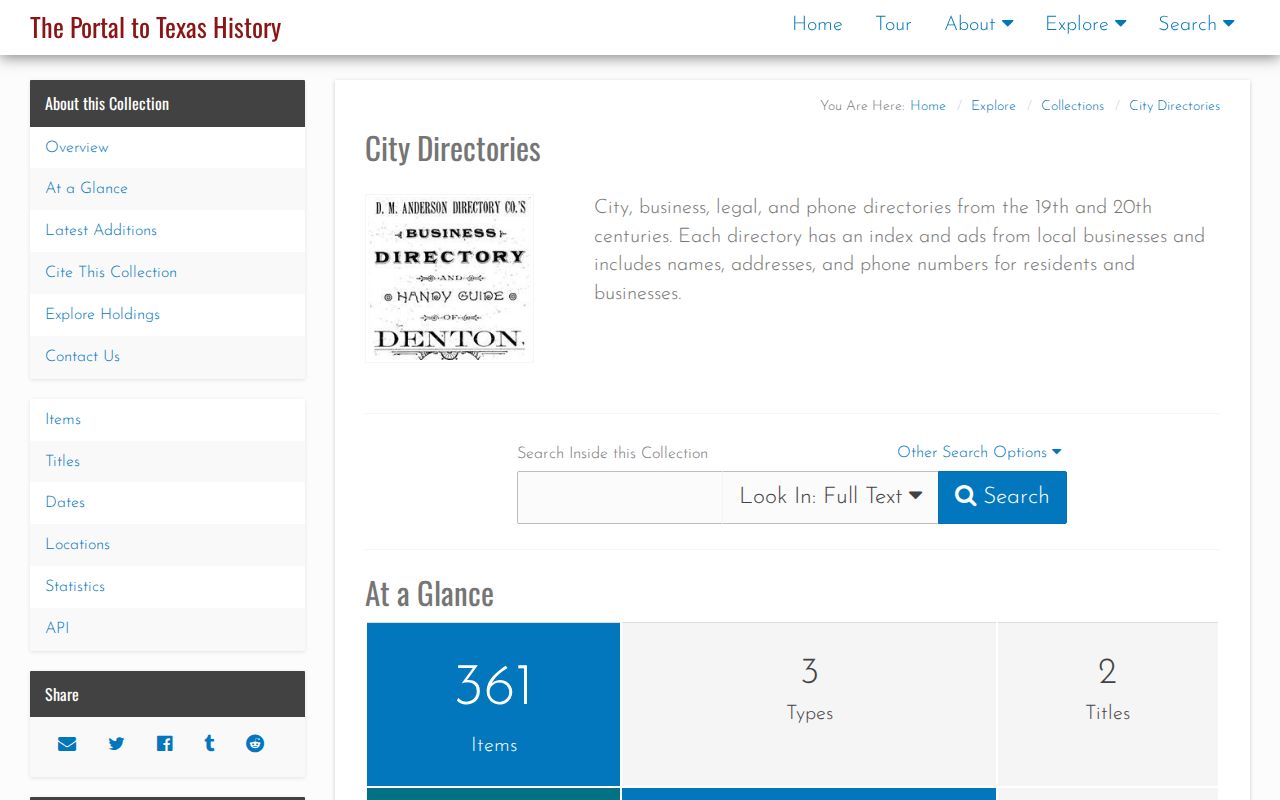
Opening the image rather than relying on the search result preserves the street heading and printed details needed for a sound household comparison.
DeSoto Past Residents Address Traps
Old-address searching can fail for ordinary reasons. The name may be printed as DeSoto or De Soto. A direction can be omitted, a street type can differ, and a rural route or subdivision name can replace a number. DeSoto’s current postal and municipal geography may also differ from historical context. The research found no official DeSoto street-renumbering list, address-change table, or dedicated house-history guide, so do not invent a conversion from an old number to a modern one.
When a street search fails, hold onto cross streets, the subdivision, lot and block, tract or abstract, and owner names. DCAD’s 17-character account is an appraisal identifier, not a deed book and page or a street number. A deed legal description is the title-record geography, while a USPS ZIP is delivery geography. Those fields can differ on a single DeSoto record, and keeping them separate prevents a plausible but wrong match.
Note: Before 1949, search rural Dallas County terms as well as the modern DeSoto label when testing a census, directory, or deed index.
DeSoto Past Residents Structure Dates
DeSoto Building Inspections and the Customer Self-Service portal are useful for a structure timeline. Permits can show an address, project, inspection date, and construction or alteration evidence. Common permit subjects include additions, carports, pools, roofing, windows or doors, solar work, fences, portable buildings, and regulated-system changes. The public research did not establish stable anonymous result fields or a historical coverage beginning, so a permit query should not be described as a complete house history.
Request older permit history through the city portal or a narrow Texas Public Information Act request if the visible record is insufficient. State the address, years, and requested record type. A permit applicant may not be the owner, and a permit date is not a deed date. The same caution applies to code-enforcement records: a complaint, notice, mowing action, lien, or case contact can tie an event to an address, but no public searchable city case database was located.
DeSoto Past Residents Trail Endpoints
When a household leaves an address trail, move outward in date order. A newspaper result can supply a death date, place, relatives, church, or funeral-home lead. Dallas Public Library describes about 1,500 newspaper titles in print or microfilm, with Dallas Morning News online coverage listed as 1885-1984. A local obituary workflow moves from the newspaper hit to the date, place, and relatives, then to Dallas County probate, deeds, cemetery material, or a Texas death verification or certificate if eligibility allows.
Probate can provide an estate name, executor or administrator, heirs, filing dates, and property references, but sealed, confidential, and sensitive filings remain restricted. Use the Dallas County record-search hub for county clerk and probate routes, and ask for a case number and record type rather than a broad request. TSLAC and Dallas repositories add early tax, court, minute, inquest, and cemetery series for specific runs. County courthouse fires do not mean every early record vanished; the question is which series survived and where it is held.
Lawful use. Historical address research fits house history, family history, estate questions, and personal curiosity. Do not use an address trail to harass, stalk, or harm a living person.